Blog

All entries:

Saturday 04 February 2012

Excerpts from Matthieu Ricard’s preface to Didier Ruef’s “Recycle”

Recently, I had the opportunity to swim in the middle of around thirty whale-sharks off the Mexican coast. But amidst the sun’s rays that lit up the shimmering ocean and the sharks around us, floating like great bubbles of mineral water were plastic bags and waste of all shapes and sizes as well as, strangely, an airport baggage check.

The development and usage of tools is such that, for the first time in the history of mankind the proliferation of manufactured objects is likely to cause irreversible damage to our ecosystem.
Indeed, the benefits we have sought have had undesirable side effects on our lives and our natural environment. Manufactured objects and waste proliferate, chain reactions are generated by the substances released, changes in the surface and the atmosphere of the earth are a direct consequence of the waste released as well as of the complex tools that we use today and discard in the environment.
image
From plastic debris that swarms in the ocean (some planktons have been found to contain up to 30% of its weight in residues of plastic micro particles, which are then absorbed by all cetaceans) to radioactive fall¬out from the 468 nuclear explosions which have occurred in Kazakhstan at the time of the Soviet Union in the utmost contempt of the fate of the local people. Even today, the number of cancers and leukemia in adults and children is. frightening as well as the continuing number of deformities in newly born infants. Everywhere waste has produced a damaging effect on our lives.

Twenty-five years after the Bhopal chemical disaster in India, tens of thousands of survivors still suffer after-effects of pesticides released by the industrial explosion that killed over 10,000 people (of whom 3,500 died instantly). They have received only meager allowances from the American company Union Carbide, which, from the locals’ perspective, remains totally indifferent to the human tragedy that it has caused far from home headquarters.
(to be continued)

The Invasion of Waste -1

Saturday 28 January 2012

Excerpts from Matthieu Ricard’s preface to Didier Ruef’s « Recycle » de Didier Ruef)
From prehistoric tools to the flooding of waste…

Some animals have learned to use and even shape rudimentary tools. Homo habilis generalized tool making and Homo sapiens has raised this production to a level of sophistication barely thinkable. The number, complexity and power of these tools are such that the impact of their use on the lives of humans and other living species on the planet have increased exponentially with respect to what man’s bare hands could have accomplished.
(image
These tools have allowed man to construct cathedrals, sail the seas and send rockets to the moon. They helped me when I waded in the waters of Lake Kokonor in north-eastern Tibet, the only human being for miles around, to chat with my then 85 year old mother who was sitting quietly in a countryside of the southwest of France, and this thanks to a small metal contraption full of complicated mechanisms which in the Middle Ages would have certainly made me pass for a sorcerer and risk being burned at the stake.

The manufacture of a tool consisted at first in modification and assembly of natural objects to help man makes things better and faster than with his bare hands. When no longer useful, these tools and the products which were made from them, were discarded and returned to nature. Millennia later, only objects made of hard materials such as stone have left long lasting traces.

Then man learned to make fire, to extract metals from crude ores, to mix substances with each other and thereby produce compounds with new properties. These are then abandoned in the environment and contribute to change it in various ways, often unpredictably and sometimes with harmful consequences in the short or long term.
(To be continued)

Magic moments-5

Monday 23 January 2012

image
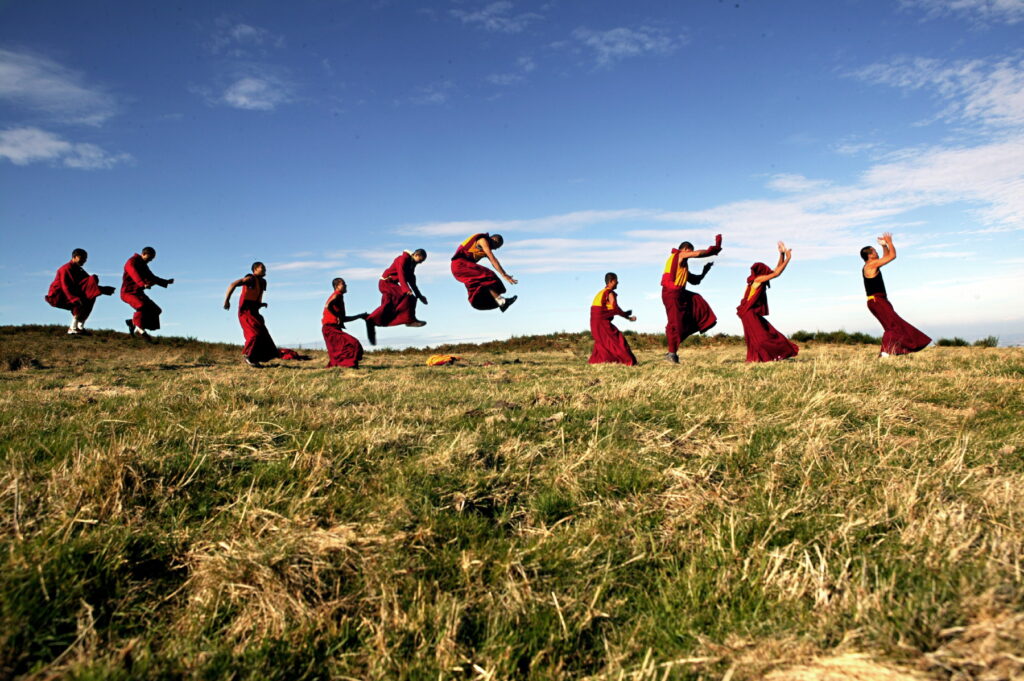
Tibetan and Bhutanese monks from Shechen Monastery in Nepal enjoy the snow on a summit overlooking Lake Geneva in Switzerland during a European tour of sacred dances. /MR 474

Magic moments-4

Thursday 19 January 2012

image
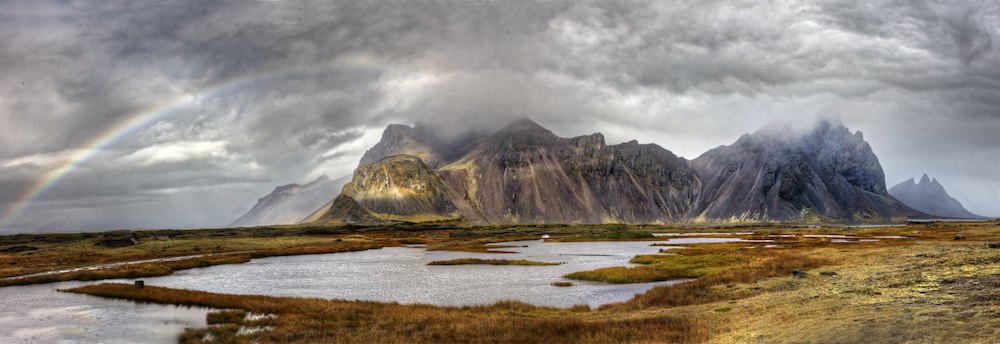
Rainbow on the high Tibetan plateau, Kham area.

Magic moments-3

Friday 13 January 2012

Hills in the Himalaya, Nepal
image
(MR 318-BW)

Magic moments-2

Monday 09 January 2012

The Tsangpo River seen from the hill of Hepori, near Samye Monastery in central Tibet. The river becomes the Brahmaputra in India, after gushing down the breathtaking gorges that surround the Namchak Barwa Mountain.
image
(MR 130-BW)

Magic Moments-1

Thursday 05 January 2012

Situated in the great loop of the Brahmaputra, one of the last places on earth to remain unexplored until the late twentieth century, the snowy peak of Namchak Barwa rises to 7,756 meters (25,439 feet). Here the majestic river, called the Tsangpo in Tibet, plunges between the mountains to emerge one hundred miles further on, 2,700 meters lower. It was not until 1998 that the American explorer Ian Baker discovered the ‘Hidden Falls’ whose existence had long been suspected.
image
(MR 105)

Sunday 01 January 2012

image
“Wrinkles should merely indicate where smiles have been.”
— Mark Twain, Following the Equator

Tuesday 27 December 2011

image
“She loved the rain as much as the sun. Her least thoughts had the cheery colors of lovely, hearty flowers, pleasing to the eye.”
French philosopher Alain
From the recent photobook 108 Sourires

The happiest day in your life

Thursday 22 December 2011

A Japanese researcher, specialist of laughter, took part in a meeting between the Dalai Lama and a group of scientists and philosophers, organized by the Mind and Life Institute to which I belong. This distinguished researcher was scheduled to make his presentation on the fifth and final day of the meeting. During the week he rarely intervened and hardly ever smiled. So we were all the more eager and curious to hear his presentation. It turned out that this scholar had a the dry sense of humor. He explained that a group of a hundred people with diabetes were invited to attend a performance of one of the most popular comics in Japan. All had a good dose of laughter for over an hour. Blood samples taken at the end of the show showed a significant decrease in the level of a blood protein involved in the symptoms of diabetes.
The next day the same group of people were invited to hear a scholarly presentation by a university professor. When blood samples were taken at the end of the conference, it appeared that the level of the same protein had not decreased but had in fact increased slightly.
The Japanese scientist then delivered his verdict with great seriousness: “The conclusion of this study is: if you have diabetes, do not listen to an academic presentation! “ 173- A Japanese researcher, specialist of laughter, took part in a meeting between the Dalai Lama and a group of scientists and philosophers, organized by the Mind and Life Institute to which I belong. This distinguished researcher was scheduled to make his presentation on the fifth and final day of the meeting.
During the week he rarely intervened and hardly ever smiled. So we were all the more eager and curious to hear his presentation. It turned out that this scholar had a the dry sense of humor. He explained that a group of a hundred people with diabetes were invited to attend a performance of one of the most popular comics in Japan. All had a good dose of laughter for over an hour. Blood samples taken at the end of the show showed a significant decrease in the level of a blood protein involved in the symptoms of diabetes.

The next day the same group of people were invited to hear a scholarly presentation by a university professor. When blood samples were taken at the end of the conference, it appeared that the level of the same protein had not decreased but had in fact increased slightly.

The Japanese scientist then delivered his verdict with great seriousness: “The conclusion of this study is: if you have diabetes, do not listen to an academic presentation! “ As yet Marcel Pagnol wrote: “Laughter is something that God gave men to console them from being intelligent.”

Then he ended with a question to the Dalai Lama: “Your Holiness, can you tell us what was the happiest moment of your life? “ A silence full of expectation fell in the room, composed of a dozen scientists, some Buddhist scholars and meditators, and a hundred guests. The Dalai Lama paused for a while, looked up in space, as if seeking an answer deep within himself, then suddenly, he leaned forward and said to the Japanese scholar in a resounding voice, “I think …. Now ! “
Everyone broke into a joyful laughter and the meeting was adjourned. Delighted, the Japanese scholar was himself laughing heartily.
image
From the recent photobook 108 Sourires